What Is a Dancer Accumulator
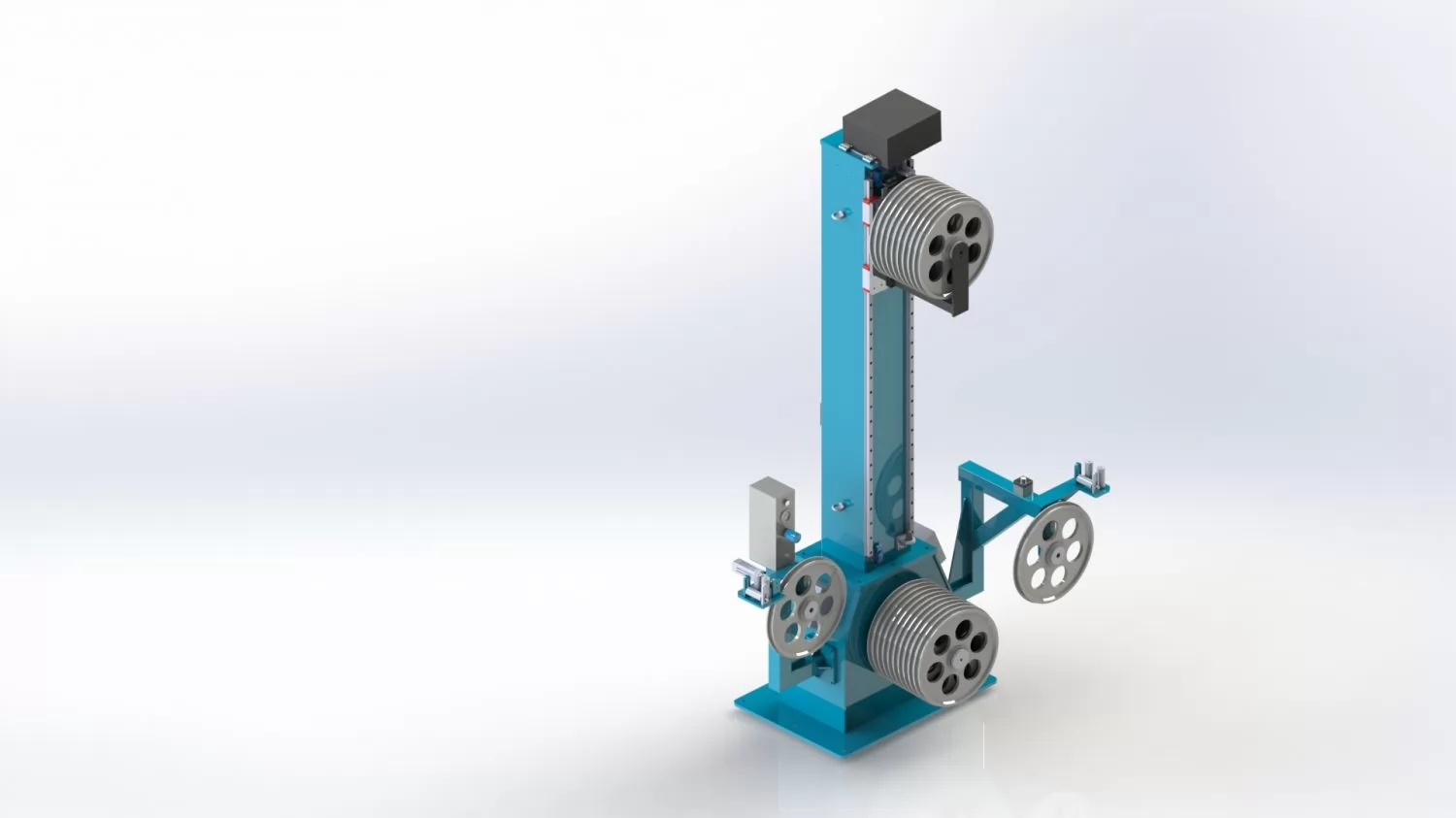
What Is a Dancer Accumulator? Tension Control in Cable Production Lines
Maintaining stable and accurate tension is one of the most important requirements in modern cable manufacturing. Changes in line speed, reel diameter, take-up speed, pay-off conditions or downstream processing can create sudden variations in cable tension.
A dancer accumulator system helps compensate for these variations by controlling material tension and providing temporary cable storage between different sections of the production line.
AFN Makina designs and manufactures dancer and accumulator systems for cable production lines, with configurations adapted to different cable diameters, production speeds and automation requirements.
For detailed technical information, visit the AFN Makina Dancer Accumulator product page.
What Is a Dancer Accumulator?
A dancer accumulator is an auxiliary machine used in cable, wire and conductor production lines to control tension, compensate for speed differences and temporarily store a certain length of material.
The system normally consists of fixed and moving rollers through which the cable or wire passes.
When cable tension changes, the dancer arm or moving roller assembly changes position. This movement can be measured by a potentiometer, encoder or another position sensor and transmitted to the machine control system.
The control system can then adjust the speed of the pay-off, capstan, take-up or other connected equipment.
As a result, the dancer system helps maintain synchronization between different machines in a continuous cable production line.
Why Is a Dancer System Used in Cable Manufacturing?
Different machines within a cable production line do not always operate at exactly the same instantaneous speed.
Speed variations can occur because of:
-
changing pay-off reel diameter,
-
increasing take-up reel diameter,
-
acceleration or deceleration of the production line,
-
changes in capstan speed,
-
reel replacement,
-
temporary production interruptions,
-
changes in process conditions.
Without proper compensation, these variations can cause excessive or insufficient cable tension.
A dancer accumulator absorbs these differences and helps the complete production line operate more smoothly and consistently.
How Does a Dancer Accumulator Work?
In a typical dancer system, the cable passes through a combination of fixed and movable rollers.
When the cable tension increases or decreases, the movable dancer mechanism changes position.
The dancer position can be monitored using:
-
potentiometers,
-
analog sensors,
-
encoders,
-
PLC systems,
-
servo control systems.
The machine control system uses this position information to adjust motor speed and restore the desired operating tension.
This creates a controlled feedback loop between the dancer and the connected production equipment.
Cable Tension Control with a Dancer System
Accurate cable tension control is particularly important when manufacturing thin wires, conductors, data cables and other products where excessive mechanical stress may affect product quality.
Excessive tension may cause:
-
wire breakage,
-
conductor elongation,
-
product deformation,
-
dimensional instability,
-
winding problems.
Insufficient tension may result in:
-
loose cable,
-
irregular winding,
-
cable movement outside the roller path,
-
unstable production conditions,
-
poor reel formation.
A properly designed dancer system helps maintain the cable within the required tension range throughout the production process.
Benefits of Dancer Accumulators in Cable Production
Stable Cable Tension
One of the main purposes of a dancer system is to maintain consistent tension on the cable or wire during production.
This becomes increasingly important as production speed increases.
Compensation for Speed Variations
The dancer reacts to temporary differences between upstream and downstream equipment, helping compensate for acceleration, deceleration and other speed changes.
Reduced Risk of Wire Breakage
By limiting sudden increases in tension, dancer systems can help reduce the risk of wire and conductor breakage, particularly when processing small-diameter products.
Improved Cable Winding
Stable incoming tension contributes to more uniform and controlled winding on take-up reels and spools.
Improved Production Line Stability
Reducing tension fluctuations can help minimize production interruptions caused by loose cable, excessive tension or winding problems.
Reduced Mechanical Stress
Uncontrolled tension variations can place additional mechanical loads on rollers, bearings, shafts and other machine components.
Maintaining stable tension can therefore contribute to smoother overall machine operation.
What Is the Difference Between a Dancer and an Accumulator?
Although the terms dancer and accumulator are often used together in the cable industry, they can perform slightly different functions.
A dancer system is primarily designed for tension control.
An accumulator is primarily designed to temporarily store a certain length of cable or wire.
In many cable production applications, these two functions can be combined within the same machine.
The correct configuration depends on factors such as:
-
cable diameter,
-
production speed,
-
required accumulation length,
-
operating tension,
-
production process,
-
upstream and downstream equipment.
Where Are Dancer Accumulators Used?
Dancer and accumulator systems can be integrated into many types of cable manufacturing machinery and production lines.
Cable Stranding and Twisting Lines
Dancer systems can be used with bunchers, single twist machines, rigid stranding lines and other twisting equipment to stabilize tension between the pay-off and production process.
Cable Rewinding Lines
During cable transfer from one reel to another, consistent tension helps achieve uniform reel formation.
Pay-Off Systems
As the diameter of a pay-off reel decreases, its rotational and mechanical characteristics continuously change.
A dancer system helps compensate for these variations.
Take-Up Systems
The diameter of the take-up reel continuously increases during production.
Dancer control can help coordinate reel speed with the actual line speed.
Cable Extrusion Lines
Dancer systems can be integrated into insulation and sheathing extrusion lines to maintain controlled cable movement through different stages of production.
Taping and Screening Lines
Stable tension is also important in cable taping, screening, shielding and wrapping applications where process consistency affects final product quality.
How to Select a Dancer Accumulator
There is no single dancer design suitable for every cable manufacturing line.
The correct system should be selected according to the characteristics of the product and production process.
Cable and Wire Diameter
The minimum and maximum product diameters directly affect roller dimensions, tension range and overall machine design.
Production Line Speed
High-speed production lines require dancer systems with suitable dynamic response characteristics.
Required Tension Range
Fine wires and large power cables require very different operating tension levels.
The dancer system must therefore be designed for the actual product range.
Accumulation Capacity
The required cable storage length should be calculated according to the production process.
Accumulation capacity can be particularly important when temporary cable storage is needed during reel changes or other process operations.
Control System
Dancer accumulators can be integrated with different control technologies, including:
-
analog control,
-
potentiometers,
-
encoders,
-
PLC systems,
-
servo motors.
Compatibility with the existing production line automation should be considered during system design.
Vertical or Horizontal Installation
Depending on available factory space, production line layout and required accumulation capacity, dancer accumulators may be designed in vertical or horizontal configurations.
Servo-Controlled Dancer Systems
Modern cable production machinery increasingly uses PLC and servo-controlled automation.
Servo-controlled dancer systems can provide precise feedback for applications requiring accurate synchronization.
Position information from an encoder or sensor can be continuously evaluated by the PLC, allowing the connected motor speed to be adjusted according to dancer position.
This type of closed-loop control can provide significant advantages in high-speed and precision cable manufacturing applications.
Dancer Systems and Cable Line Synchronization
A modern cable manufacturing line normally consists of several machines operating together as one integrated production system.
A typical line arrangement may include:
Pay-Off → Dancer → Production Process → Capstan → Dancer → Take-Up
In this configuration, dancer systems act as buffers between different machines.
They help compensate for short-term speed differences and contribute to smoother synchronization throughout the complete cable production line.
AFN Makina Dancer Accumulator Solutions
AFN Makina manufactures cable production machinery and auxiliary equipment for different industrial applications.
Depending on production requirements, dancer accumulator systems can be designed with:
-
spring-loaded tension control,
-
pneumatic tension control,
-
servo-assisted systems,
-
analog feedback,
-
potentiometer feedback,
-
encoder control,
-
vertical configurations,
-
horizontal configurations.
The objective is not simply to manufacture a standalone auxiliary machine, but to develop a dancer system that works together with the pay-off, capstan, stranding machine, production line and take-up system.
For technical specifications and customized solutions, visit the AFN Makina Dancer Accumulator Systems page.
Frequently Asked Questions About Dancer Accumulators
What Does a Dancer Accumulator Do?
A dancer accumulator helps control cable or wire tension, compensate for speed differences between machines and improve synchronization within a cable production line.
Why Is Tension Control Important in Cable Manufacturing?
Stable tension helps prevent wire breakage, deformation, loose cable and irregular winding while contributing to consistent product quality and stable machine operation.
Can a Dancer System Reduce Wire Breakage?
Yes. A correctly designed and adjusted dancer can absorb sudden tension variations and help reduce the risk of breakage, particularly when processing fine wires and conductors.
Which Cable Machines Use Dancer Systems?
Dancer systems can be used with cable extrusion lines, stranding machines, bunchers, single twist machines, rewinding lines, pay-offs, take-ups, taping machines and screening lines.
Can a Dancer Accumulator Be Servo Controlled?
Yes. Dancer systems can be integrated with servo motors, encoders and PLC automation for precise tension and speed control.
Should a Dancer Accumulator Be Vertical or Horizontal?
The correct configuration depends on available factory space, required accumulation capacity, cable characteristics and production line layout. Both vertical and horizontal dancer accumulator systems can be manufactured.
Are a Dancer and an Accumulator the Same Machine?
Not necessarily. A dancer is mainly used for tension control, while an accumulator temporarily stores cable or wire. However, both functions can be combined into a single system.
Can AFN Makina Manufacture Custom Dancer Accumulators?
Yes. Dancer accumulator systems can be engineered according to cable diameter, production speed, tension range, required accumulation capacity, factory layout and automation requirements.